D2 Survivors Tier List: Class Roles and Playstyles
Updated 2026-11-07
Version build 20261101.1
This D2 Survivors tier list groups classes by how their skills fight and support you: ranged attacks, close combat, spells, summons, traps or auras. Use those roles to find a playstyle that feels right, then check the skill trees for the tools that carry it. It is a guide to class mechanics, not a claim that one class always wins.
How is this D2 Survivors tier list grouped?
Read the D2 Survivors tier list as a map of combat roles. The Amazon keeps pressure on nearby monsters with arrows and javelins, while the Assassin lays traps and mixes them with claw blows and kicks. The Barbarian brings weapon attacks and warcries; the Druid combines spells, forms and beasts; the Necromancer builds around spells and summoned fighters; and the Paladin drafts auras alongside combat skills.
Those labels describe what a class does, not a universal strength order. Skills cast on their own recharges, and their damage, reach and other behavior depend on the class rules. Some effects benefit from gear’s +skills; other details, such as how many shots a skill releases or how long it lasts, stay tied to the level at which you learned it.
A useful first split is where your damage comes from: weapon blows, spells, or allies and placed skills. The class overview is a good next stop if you want to compare the available class pages before choosing a build.
Which classes fit ranged, melee or spell play?
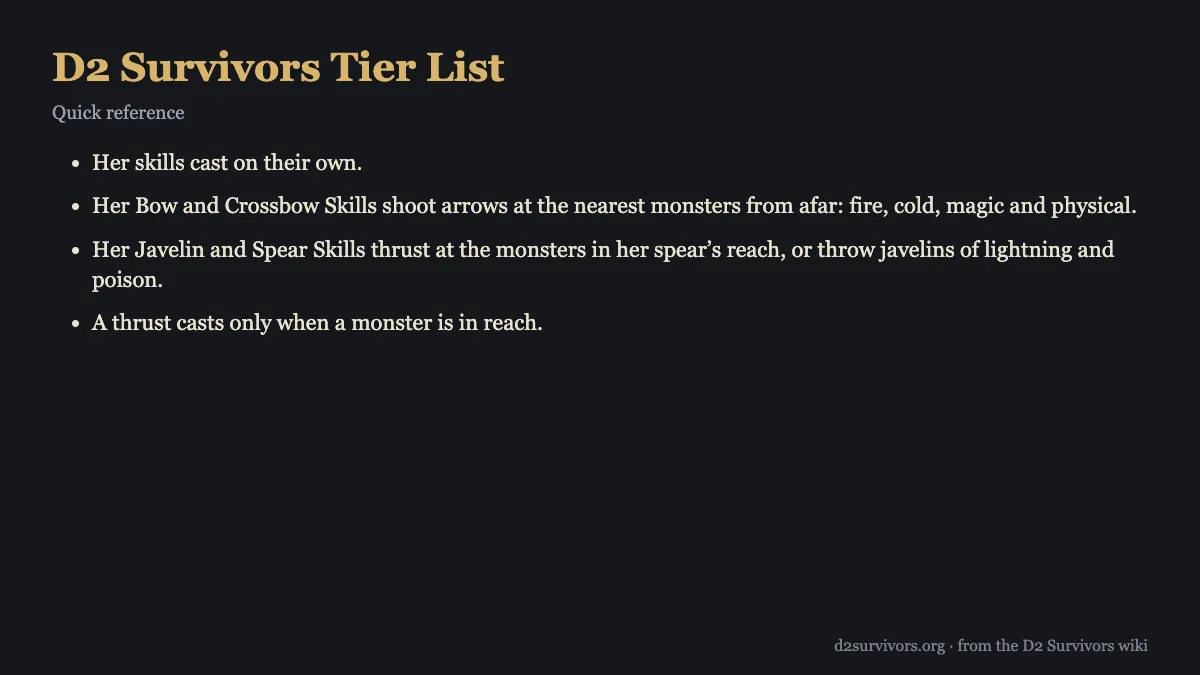
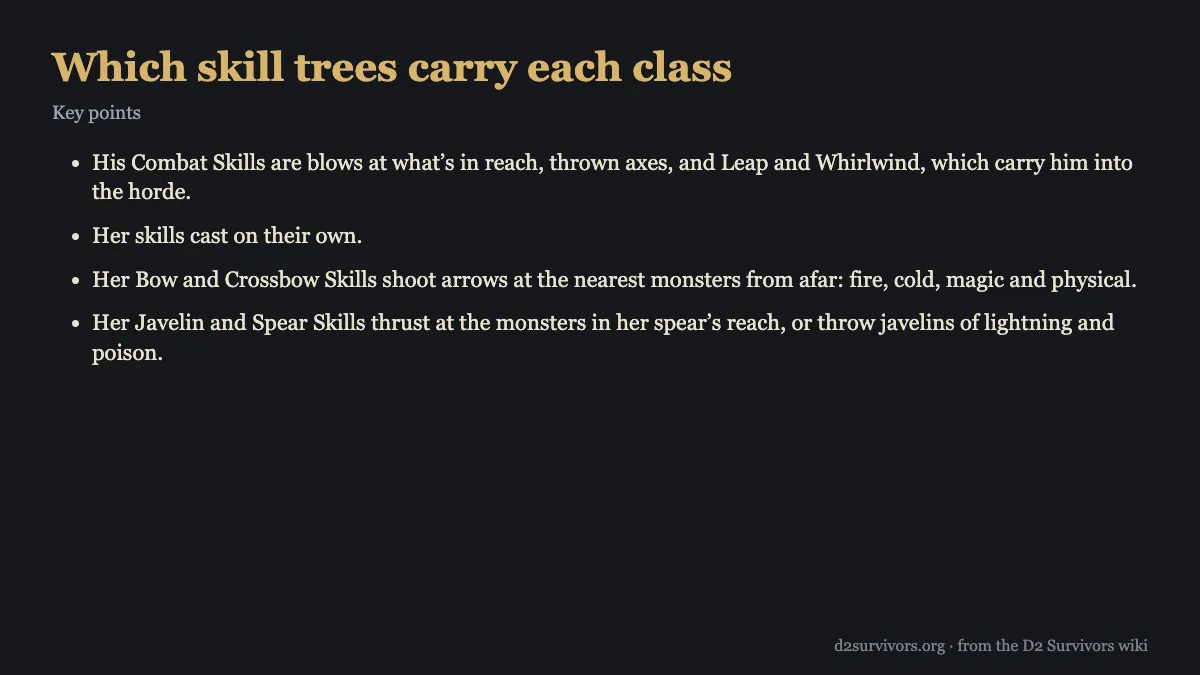
For ranged attacks, the Amazon’s Bow and Crossbow Skills send fire, cold, magic and physical arrows toward the nearest monsters. Her Javelin and Spear Skills thrust at enemies in reach or throw lightning and poison javelins. A volley distributes shots among nearby targets, and when there are fewer monsters than shots, it sends the remaining shots at them again. Multiple Shot’s fan works differently.
The Assassin’s Traps fire on their own after she places them near the nearest pack. Her Martial Arts use claw blows and kicks against the toughest monster in reach, with Dragon Flight moving her to a target first. The Barbarian focuses on weapon combat: his skills include blows at nearby enemies, thrown axes, Leap and Whirlwind. Double Swing opens as his first card.
The Druid has a clear spell route through fire, cold and physical whirlwinds, plus weapon based Shape Shifting Skills. His forms do not stop him from casting spells or raising summons. The Necromancer’s Poison and Bone Skills are spells, apart from the physical stab of Poison Dagger. The Paladin has spells and melee blows, but his hammers, bolts, auras and Holy Shield’s smite never critically strike.
Pick a ranged build if you like attacks that seek nearby targets, a melee build if you want weapon blows or kicks, and a spell build if you want damage skills raised by Energy. Compare Amazon builds, Assassin builds and Druid builds for class specific routes.
Which classes lean on summons, traps or auras in the D2 Survivors tier list?
The Assassin is the trap specialist. Her traps fire at monsters within their own range, pass by monsters immune to their damage and wait when no target is there. Up to 5 traps stand at once, with one more for each other kind standing. Traps spend their shots, expire after a while or fall when you run far away. A trap kill counts as its own, so your items’ effects on a kill come only from kills you make.
The Necromancer raises skeletons, skeletal mages, a golem and revived monsters. The Druid raises fighting beasts such as ravens, wolves, a grizzly and poison creepers, alongside a spirit and vines that follow him without fighting or being attacked. Summons can draw monster attacks, and a summon left far behind appears at your side. The Amazon’s Valkyrie fights near her and returns when a new cast follows her fall.
Auras add another kind of support. Paladin auras are drafted as passives, and every aura you draft works at once. A monster in two auras of the same kind takes only the stronger one. Auras from you, your mercenary or gear can also reach nearby summons; Defiance reduces physical blows on them, Prayer heals them, Thorns strikes back at melee attackers, and Fanaticism quickens their attacks.
For a hands on starting point, see the Necromancer guide for summon skills and the Paladin guide for auras. The Assassin guide covers traps and Martial Arts together.
Which skill trees carry each class?
Use the tree names to see a class’s main toolkit. The Amazon has Bow and Crossbow Skills, Javelin and Spear Skills, and Passive and Magic Skills. The Assassin has Traps, Martial Arts and Shadow Disciplines. The Barbarian has Combat Skills and warcries. The Druid divides skills among Elemental, Shape Shifting and Summoning. The Necromancer uses Poison and Bone, Summoning and curses; the Paladin has Combat Skills, Offensive Auras and Defensive Auras.
Tree labels do not mean every skill behaves alike. Amazon passives such as Inner Sight, Slow Missiles and Decoy work without a cast. The Assassin’s Burst of Speed, Fade, Venom, Claw Mastery and Weapon Block are also always on. Druid Werewolf and Werebear skills can add life and critical strike chance while held, and the Paladin drafts auras as passives.
Skill growth varies by class and skill. Druid spells and beasts, and Assassin traps and several mind skills, gain +skills along Diablo II’s curve where it gives more. The Necromancer’s Energy raises his spells and summons more than it does for other classes. For the Paladin, +skills raise damage, while a skill’s reach and recharge remain at its card level.
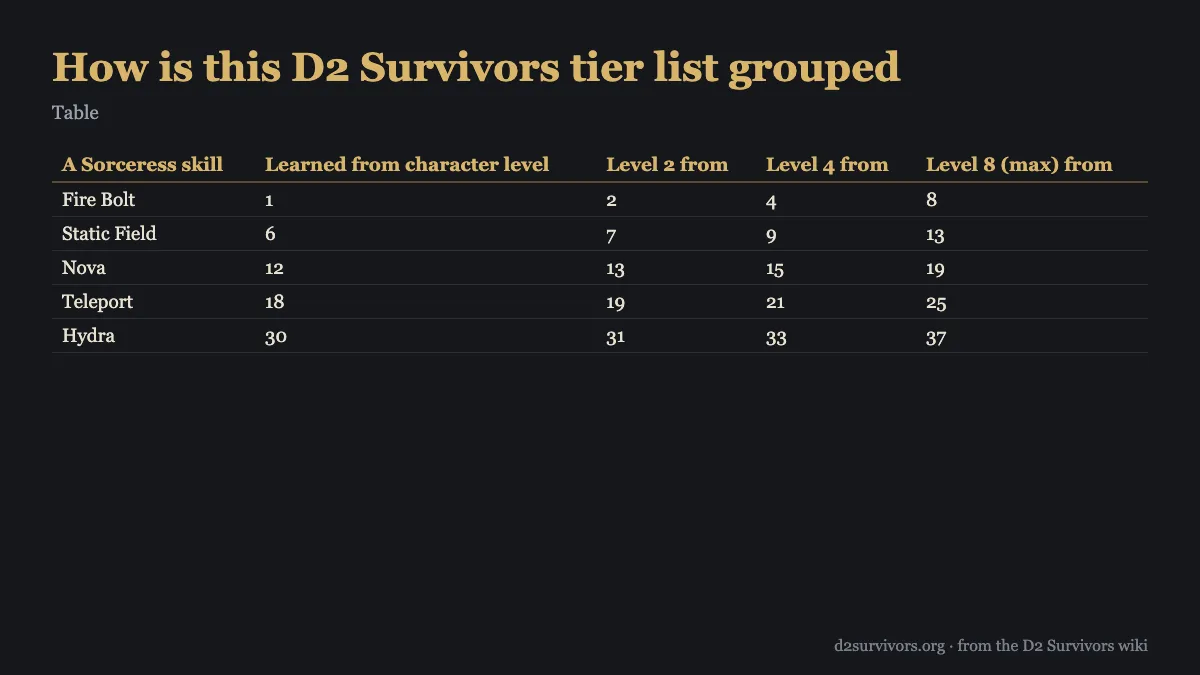
| A Sorceress skill | Learned from character level | Level 2 from | Level 4 from | Level 8 (max) from |
|---|---|---|---|---|
| Fire Bolt | 1 | 2 | 4 | 8 |
| Static Field | 6 | 7 | 9 | 13 |
| Nova | 12 | 13 | 15 | 19 |
| Teleport | 18 | 19 | 21 | 25 |
| Hydra | 30 | 31 | 33 | 37 |
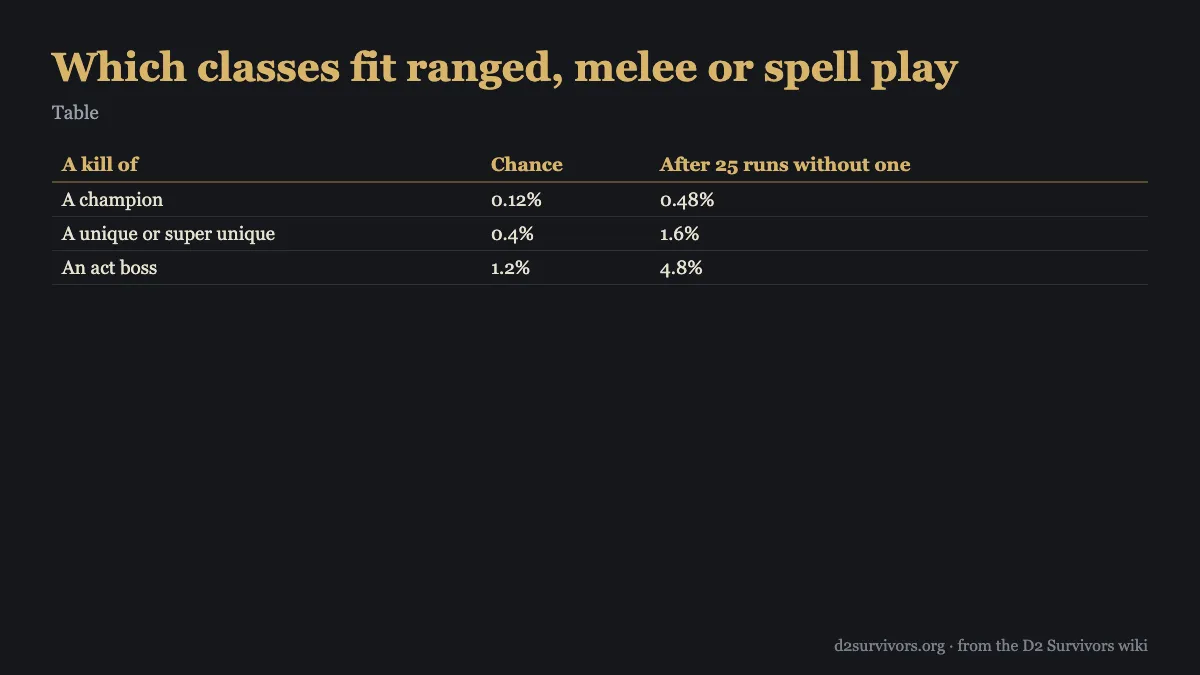
| A kill of | Chance | After 25 runs without one |
|---|---|---|
| A champion | 0.12% | 0.48% |
| A unique or super unique | 0.4% | 1.6% |
| An act boss | 1.2% | 4.8% |
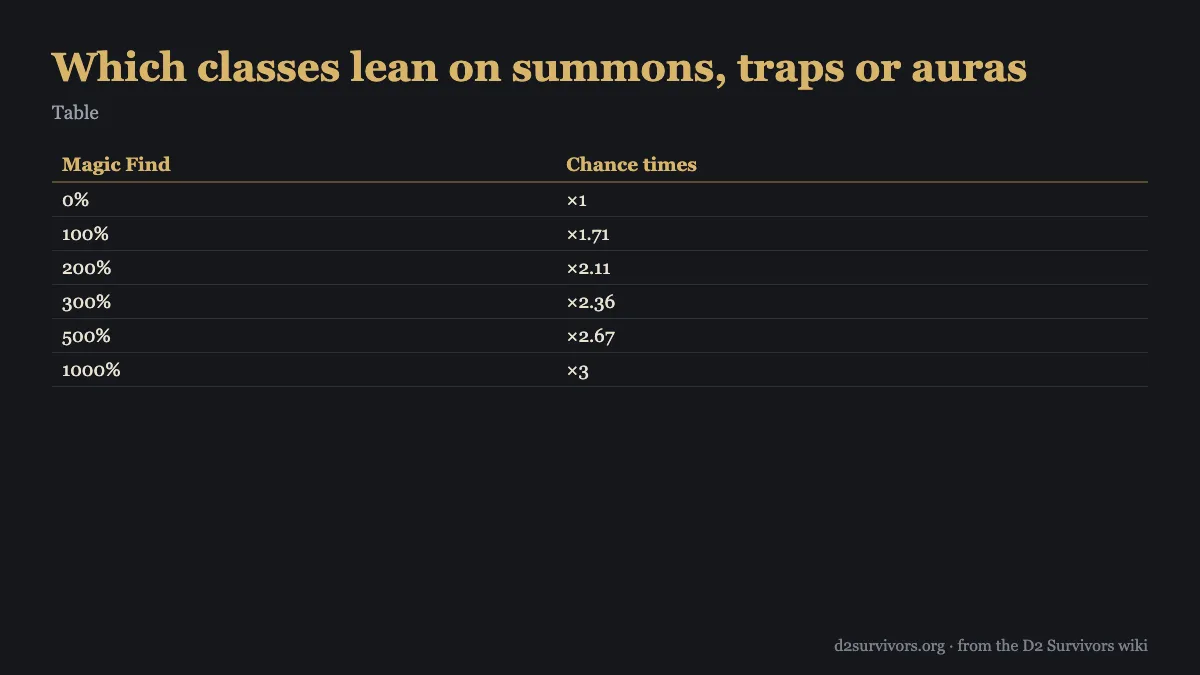
| Magic Find | Chance times |
|---|---|
| 0% | ×1 |
| 100% | ×1.71 |
| 200% | ×2.11 |
| 300% | ×2.36 |
| 500% | ×2.67 |
| 1000% | ×3 |
For a focused look at tree choices, browse the Sorceress build guide and the other class build pages. Let the skills you want to use guide the choice, since reach, recharge and targeting can matter as much as a skill’s damage.
How should a new player read this D2 Survivors tier list?
Start with the attacks you enjoy, then check what supports them. An Amazon volley can focus its shots when few monsters are present, while a thrust only casts when a monster it can hurt is in reach. Assassin charge ups build charges through blows, and finishers release the charges they hold. Druid spells and summons can keep working alongside a wereform.
Next, separate damage from utility. Gear’s +skills can raise damage, but they do not always add more shots, reach or duration. Some weapon skills keep their physical damage from the weapon at every skill level. Critical strikes also have limits: the Amazon’s poison and burning ground do not critically strike, and a Paladin critical strike doubles physical damage alone.
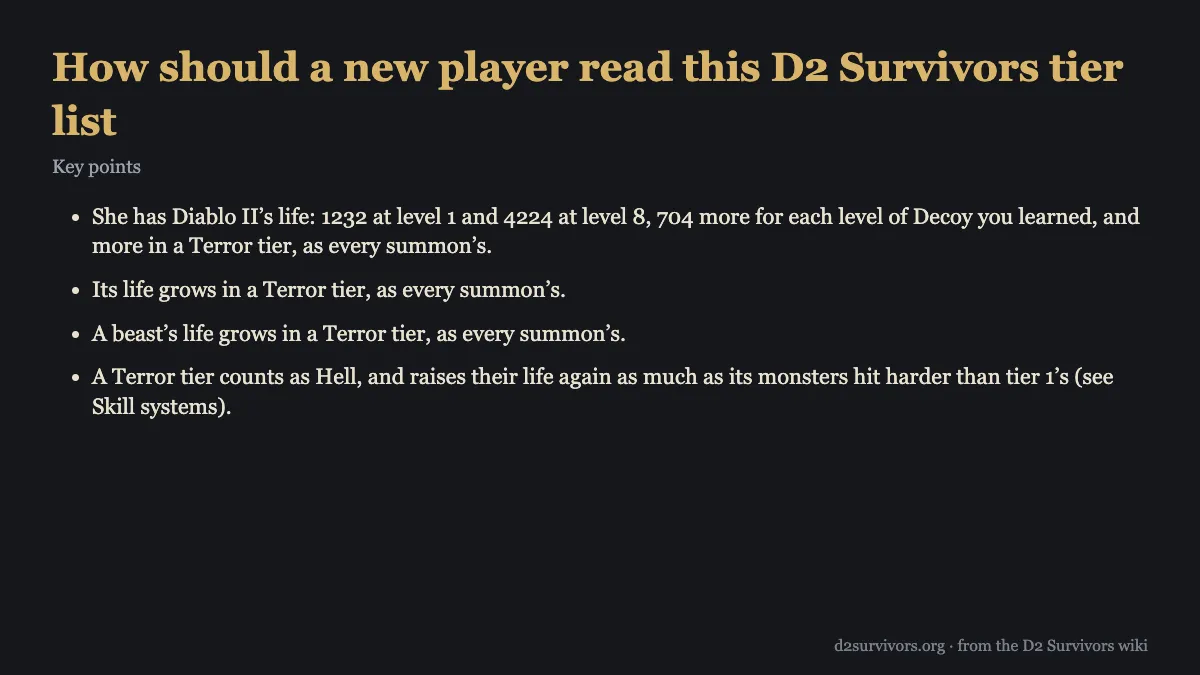
Finally, account for staying power. A Valkyrie returns with the next cast after falling, and the Assassin can raise a new shadow after hers falls. The Necromancer’s summons gain life on higher difficulties, and Terror tiers raise summon life again. These mechanics help explain how a build plays; they do not make one class the right fit for every player.
If you are new, choose a tree with an attack you want to use and a supporting tool you understand. Then read the relevant class page for details about its targeting and skill growth. This D2 Survivors tier list is most useful as a route into those class rules, rather than as a substitute for them.
D2 Survivors Tier List FAQ
Is there one strongest class in the D2 Survivors tier list?
The class mechanics here do not establish a universal winner. Use the role and skill tree that suit how you want to fight, then explore that class’s build.
Can the Druid cast spells while transformed?
Yes. Werewolf and Werebear forms do not stop him from casting spells or raising summons, so those skills can work together.
Do traps benefit from Faster Cast Rate?
Faster Cast Rate sets traps down sooner. Once a trap is standing, it fires at its own pace.
Do gear +skills raise every part of a skill?
No. They can raise damage, but details such as shot count, reach, duration and recharge can stay at the learned level. Check the class rules for the skill you plan to use.
How should I use the D2 Survivors tier list when choosing a class?
Treat the D2 Survivors tier list as a guide to roles and mechanics. Pick the combat style you want, then follow its class page to understand the skill trees.
Facts on this page come from the D2 Survivors wiki at d2survivors.lol (game build 20261101.1), read on 2026-11-07. Values can change with later builds.